
Kenya’s Maternal Health Crisis: Preventable Deaths Expose Gaps in Care
Posted by EDITORIAL
Kenya’s maternal health crisis highlights preventable deaths, premature births and gaps in healthcare access as new EWENE data calls for stronger maternal and newborn care.
In Summary
- Kenya continues to lose mothers and newborns to largely preventable complications, with gaps in emergency obstetric care, access to health facilities, referral systems and the availability of essential medical services contributing to the crisis.
- New EWENE data highlights the scale of maternal and newborn deaths across the country, reinforcing the need for stronger maternal care, early intervention, safer deliveries and specialised care for premature babies.
Also Read: How Kenya Marked World Prematurity Day
Also Read: When Giving Life is a fight for Survival
Kenya’s maternal health challenge extends beyond the number of women attending hospitals. It raises fundamental questions about whether expectant mothers can access quality healthcare, receive timely medical attention during pregnancy, survive childbirth and return home safely with their newborns.
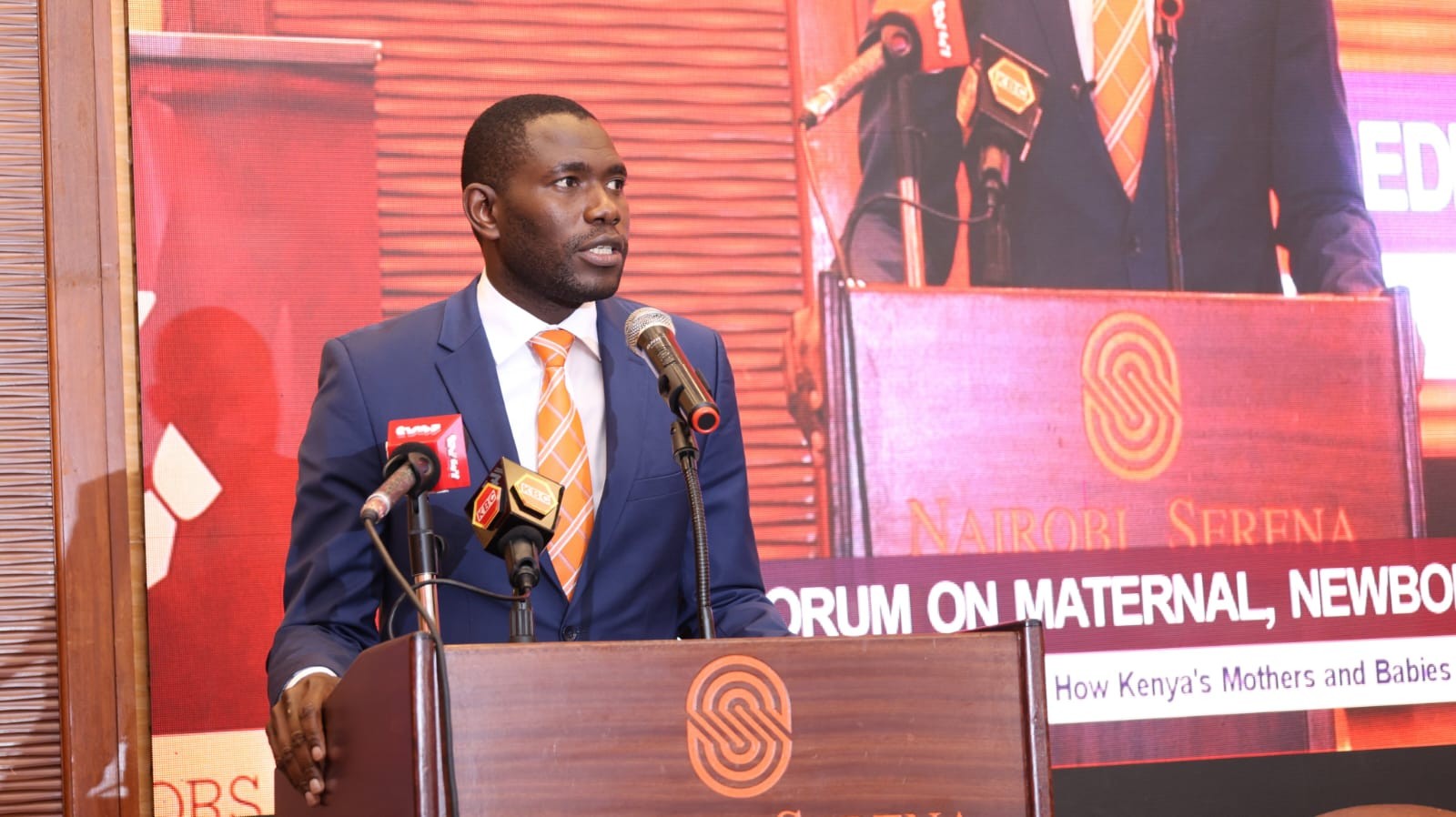
These issues took centre stage on Thursday, November 19, when the Kenya Editors Guild (KEG) convened a high-level forum bringing together editors, policymakers, healthcare professionals and researchers to examine the state of maternal, newborn and child health in Kenya.
The discussions examined the innovations being introduced to improve maternal and newborn survival, the persistent gaps in healthcare delivery and the interventions needed to prevent deaths during pregnancy, childbirth and the first days of a child's life.
At the centre of the conversation was a critical question: why are mothers and newborns still dying from complications that healthcare systems can often prevent or successfully manage?
According to the Ministry of Health's Every Woman Every Newborn Everywhere (EWENE) initiative, Kenya's maternal health indicators remain a significant public health concern despite improvements in access to antenatal services and skilled birth attendance.
EWENE, which stands for Every Woman Every Newborn Everywhere, is a global maternal and newborn health initiative adopted by Kenya to accelerate efforts to reduce preventable deaths. It brings together national and county governments, healthcare providers and development partners to improve pregnancy care, safe delivery, emergency response and newborn survival.
The initiative also provides a public dashboard that tracks maternal and newborn health indicators across all 47 counties. The platform uses monthly reports submitted by health facilities through the Kenya Health Information System (KHIS), which operates on the DHIS2 digital health information platform.
Its purpose is to help health authorities identify where mothers and newborns are dying, monitor service delivery and determine where additional healthcare resources and interventions are required.
The latest available dashboard figures, covering January to September 2026, recorded 900,027 facility births, 797 maternal deaths and 7,954 newborn deaths across the country.
The data further indicates that maternal deaths reported in health facilities declined from 845 during the corresponding period in 2025 to 797 in 2026, while newborn deaths fell from 8,319 to 7,954.
Although the decline signals progress, thousands of families continue to experience the loss of mothers and newborns, underscoring the need to strengthen healthcare services beyond the numbers.
For ordinary Kenyan families, these statistics represent more than government performance indicators. They reflect whether a woman can access antenatal care, whether a hospital has the capacity to manage an emergency and whether a newborn receives the specialised attention required to survive.
Access to healthcare remains one of the most important determinants of maternal survival. While many women attend at least one antenatal appointment, consistent follow-up throughout pregnancy is equally important.
Antenatal care allows healthcare professionals to monitor the health of both mother and baby, identify complications and intervene before they become life-threatening. Conditions such as high blood pressure, anaemia and infections can be detected and managed through appropriate medical assessment.
However, financial constraints, geographical distance, inadequate transport, shortages of healthcare personnel and limited access to well-equipped facilities continue to affect the ability of some women to obtain timely care.
Kenya's EWENE indicators show that approximately 98 per cent of pregnant women attend at least one antenatal visit, but only 66 per cent achieve four or more visits. The difference highlights the challenge of ensuring continuity of care throughout pregnancy.
According to the Ministry of Health's EWENE Acceleration Plan, the leading direct causes of maternal deaths in Kenya include postpartum haemorrhage, hypertensive disorders of pregnancy, sepsis and obstructed labour.
Postpartum haemorrhage, which refers to excessive bleeding after childbirth, is a major contributor to maternal deaths. Without rapid access to trained medical personnel, blood transfusion services and appropriate medicines, a mother experiencing severe bleeding can lose her life.
Hypertensive disorders, including pre-eclampsia and eclampsia, can also lead to severe complications if high blood pressure during pregnancy is not identified and managed in time. Sepsis, an extreme response to infection, and obstructed labour are additional threats that require prompt medical intervention.
These are conditions where the availability of emergency obstetric care can make the difference between life and death.
The challenge, therefore, is not simply encouraging women to deliver in hospitals, but ensuring that the facilities they reach have the capacity to provide the care they need.
The EWENE initiative identifies significant gaps in emergency obstetric services. Only 37 per cent of facilities offering delivery services meet all the requirements for basic emergency obstetric and newborn care.
It also indicates that approximately one in three Level 4 and Level 5 hospitals cannot provide caesarean section services or blood transfusions, while only 12 per cent of facilities providing maternity care are equipped to offer newborn care.
These gaps raise concerns about the safety of mothers who experience complications after reaching healthcare facilities.
Speaking at the forum, Principal Secretary for Medical Services Dr Ouma Oluga emphasised that access to healthcare is a constitutional entitlement rather than a privilege determined by a person's financial circumstances.
"What the Constitution entitles every citizen to is the highest attainable standard of health. These are basic services that every Kenyan is entitled to, whether you have paid or have not paid, whether you are poor or rich, or whether you are employed," he said.
His remarks placed the responsibility on healthcare authorities to ensure that maternal and newborn services are accessible, affordable and adequately supported.
He also highlighted the importance of evidence in determining healthcare financing, arguing that population figures must be translated into financial requirements when governments prepare budgets for essential services, including antenatal care.
Without adequate funding, health facilities risk operating without sufficient personnel, medicines, equipment and emergency response capacity.
The conversation also highlighted the importance of preventing premature births and improving the survival of babies born before completing the normal period of pregnancy.
Premature birth occurs when a baby is born before 37 completed weeks of pregnancy. Such babies may have underdeveloped lungs, difficulty maintaining body temperature, feeding challenges and increased vulnerability to infections.
Beyond improving hospital-based services, the forum explored how technology and medical research could strengthen maternal and newborn healthcare.
Dr Wangui Muthigani, Director and Programme Lead for Women's Health at the Singh Health Institute, cautioned against treating technology as an independent solution to healthcare challenges.
"Technology itself is not the solution to all the problems. It is about strengthening the whole healthcare system around it," she said, emphasising the importance of functional referral systems.
Her observation highlighted a critical weakness in maternal healthcare: the ability to transfer women and newborns requiring specialised treatment from lower-level facilities to hospitals equipped to manage emergencies.
A referral system that works effectively ensures that patients receive the appropriate care without unnecessary delays. This requires functional ambulances, proper communication between facilities, trained personnel and the availability of receiving hospitals with the necessary equipment and specialists.
For a woman experiencing severe complications during pregnancy or childbirth, delays in referral can have devastating consequences. The same applies to newborns requiring urgent respiratory support or specialised treatment.
Research and prevention were also identified as important components of improving survival.
Dr Hellen Barsosio, Assistant Principal Clinical Research Scientist at the Kenya Medical Research Institute (KEMRI), highlighted maternal immunisation as an important preventive intervention.
She explained that vaccination during pregnancy can help mothers develop protective antibodies that are transferred to their babies, providing protection against certain infections during the early stages of life.
Such interventions demonstrate why maternal healthcare should begin before childbirth and continue after delivery, with preventive services forming part of a broader strategy to protect both mothers and newborns.
For the Kenya Editors Guild, the discussions also underscored the importance of translating healthcare policies and research findings into tangible improvements in people's lives.
KEG President Zubeidah Kananu challenged stakeholders to look beyond medical statistics and institutional commitments when evaluating maternal and newborn health outcomes.
"When we speak about maternal and newborn health, we are not simply discussing medical statistics, hospital services, or government programmes. We are talking about the health and well-being of mothers, the survival of children, and the strength of the systems entrusted with protecting them," she said.
Her remarks captured the central concern emerging from the discussions: healthcare interventions must ultimately translate into mothers surviving childbirth and newborns receiving the care necessary to grow and thrive.
The challenge also extends to accountability. National and county governments must ensure that healthcare budgets reflect the actual needs of their populations, while health facilities must have adequate personnel, essential medicines, blood supplies, equipment and functional referral arrangements.
The EWENE Acceleration Plan 2026–2028 provides a framework for addressing these challenges through improved quality of care, healthcare financing, workforce capacity, data monitoring, emergency response and community engagement.
Its implementation will require coordination between the national government, county administrations, healthcare professionals and development partners. Equally important is ensuring that the progress reported through national dashboards translates into better services at individual health facilities.
Ultimately, reducing maternal and newborn deaths is not only a healthcare priority but also a social and economic imperative.
A maternal death can leave children without their mothers, disrupt families and deepen economic hardship. The loss of a newborn represents a family's hopes cut short, while preventable complications can have lasting consequences for children who survive.
Kenya's constitutional commitment to the highest attainable standard of health must therefore be reflected in the everyday experiences of pregnant women, mothers and newborns, regardless of their income or where they live.
The measure of progress should not simply be the number of policies developed, hospitals constructed or programmes launched. It should be whether a woman can safely navigate pregnancy, access skilled care when she needs it, survive childbirth and receive adequate support after delivery.
For newborns, it should mean that babies born at full term or prematurely have access to the medical attention necessary to survive their earliest and most vulnerable days.
The question facing Kenya is no longer simply how to expand maternal healthcare, but how to ensure that every mother and newborn who needs care actually receives it in time.