
East Africa Seed Conference Calls for Protection of Indigenous Seeds and Farmers’ Rights
Posted by EDITORIAL
East Africa Indigenous Seed Conference ends with calls to protect indigenous seeds, strengthen community seed banks and safeguard farmers' rights to advance food security and seed sovereignty.
In Summary:
The first Eastern Africa Indigenous Seed Conference has concluded with renewed calls to protect indigenous seeds, strengthen farmer-managed seed systems and recognise traditional agricultural knowledge as a foundation for food sovereignty. Delegates highlighted the importance of community seed banks, agricultural biodiversity, supportive policies and farmers' rights to save, exchange and use indigenous seeds as East Africa seeks more resilient and sustainable food systems.
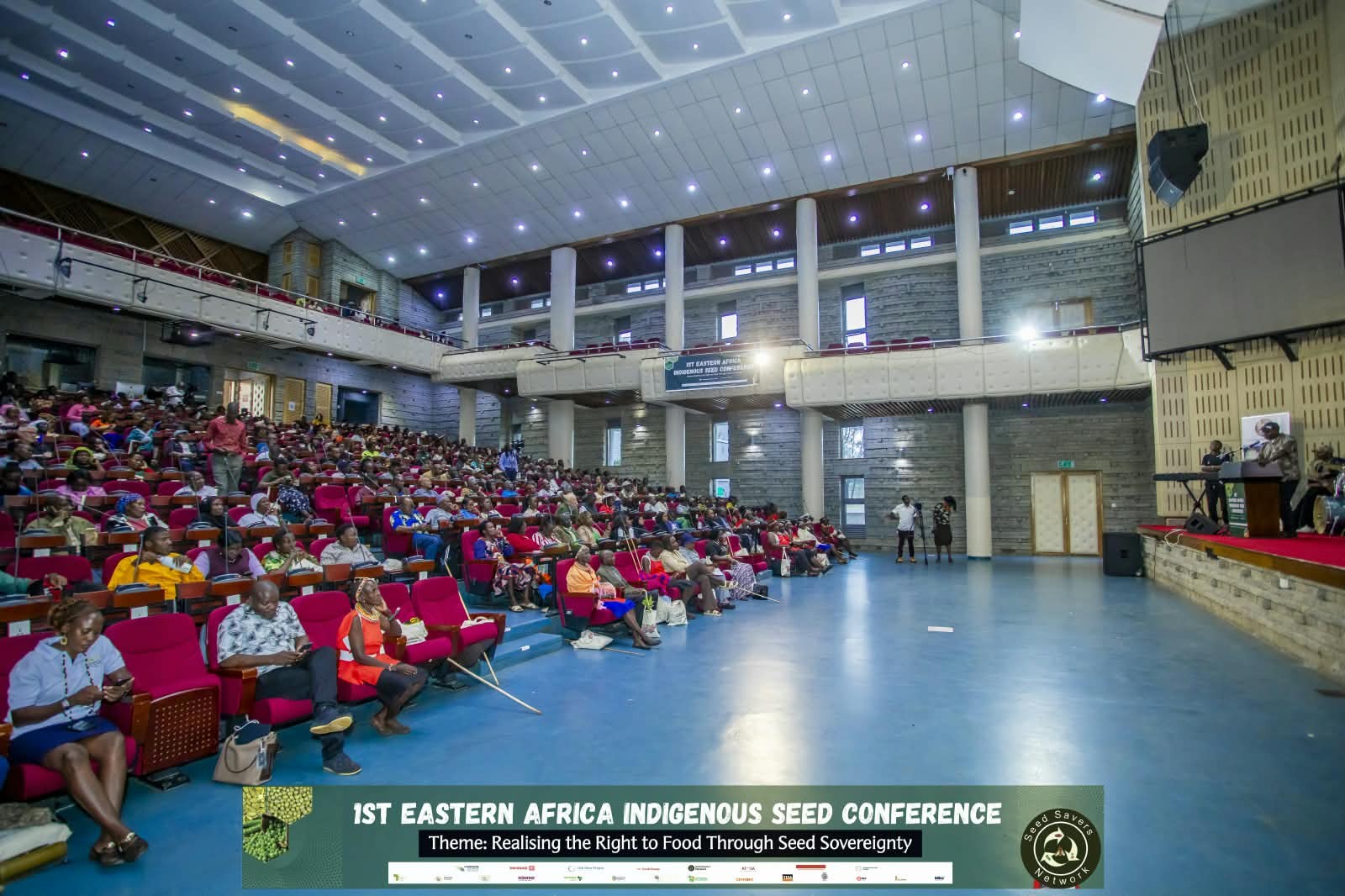
The preservation of indigenous seeds has emerged as a critical priority for East Africa's food security following the conclusion of a four-day regional conference that brought together farmers, researchers, policymakers and agricultural stakeholders to examine the future of traditional seed systems.
The first Eastern Africa Indigenous Seed Conference, held from November 17 to 20, concluded with calls for stronger recognition of indigenous seeds and farmer-managed seed systems, with delegates emphasising that the region's ability to achieve food security is closely linked to its capacity to protect agricultural biodiversity and maintain control over its food production resources.
Held under the theme, "Realizing the Right to Food Through Seed Sovereignty," the conference examined the relationship between indigenous seeds, farmers' rights, climate resilience, nutrition and the protection of traditional agricultural knowledge.
A central concern throughout the deliberations was the gradual erosion of indigenous crop varieties and the growing pressure on traditional farming systems. For generations, African communities have relied on locally adapted seeds, selecting, preserving and exchanging planting materials according to their environmental conditions, food preferences and agricultural knowledge.
These practices have sustained diverse food systems, allowing farmers to maintain varieties of maize, millet, sorghum, beans and indigenous vegetables suited to different ecological conditions.
However, changing agricultural practices, increasing dependence on commercial seed markets and limited institutional recognition of farmer-managed systems have raised concerns about the future of these traditional resources.
Speaking during the conference, Daniel Wanjama, Executive Director of Seed Savers Network, highlighted the importance of farmer-managed seed systems, noting that approximately 80 per cent of the seeds used by African smallholder farmers originate from these systems, most of which comprise indigenous varieties.
He called for greater recognition of the farmers and communities responsible for maintaining these resources, arguing that protecting indigenous seeds must become an integral part of agricultural policy, public awareness and conservation efforts.
The discussions placed particular emphasis on the need to strengthen community seed banks as a practical mechanism for preserving local varieties and ensuring that farmers can access diverse planting materials.
Community seed banks allow farmers to collectively conserve, document and exchange indigenous seeds while maintaining local knowledge about their characteristics, cultivation and preservation.
Beyond conservation, these initiatives can help reduce farmers' dependence on external seed suppliers, particularly where the cost and availability of commercial planting materials create additional production challenges.
The conference also examined the importance of protecting farmers' rights to save, exchange, use and improve indigenous seeds. Participants highlighted the need for agricultural policies and regulatory frameworks that recognise the contribution of traditional seed systems while supporting appropriate quality standards and sustainable seed production.
This discussion is particularly significant because seed sovereignty goes beyond the availability of planting materials. It concerns the ability of communities to participate in decisions about what they grow, how seeds are preserved and exchanged, and the future direction of their food systems.
For smallholder farmers, retaining access to indigenous seeds can provide greater flexibility in selecting crops suited to local conditions and household consumption needs. It also helps preserve traditional food varieties that contribute to dietary diversity and cultural identity.
Another important area of deliberation was the role of indigenous seeds in responding to climate change. With farmers increasingly exposed to unpredictable rainfall, prolonged droughts, changing temperatures and emerging agricultural pests, locally adapted varieties offer an important resource for maintaining diverse production systems.
Unlike relying heavily on a limited number of crop varieties, agricultural diversification allows farming communities to maintain different crops with varying characteristics and growing requirements. This can help reduce vulnerability when particular crops are affected by unfavourable weather conditions or other production challenges.
The importance of preserving indigenous seeds was also illustrated through the experiences of farmers attending the conference.
Judy Nyokabi Mugo, a farmer and Gender Transformative Approaches champion from Gatundu North in Kiambu County, shared how traditional maize and bean varieties continue to contribute to household food production.
She highlighted the Gikuyu maize variety, which she described as valuable for its local adaptation and resistance to certain agricultural pests. She also explained how traditional seed preservation methods, including storing seeds in bottles mixed with ash, help maintain planting materials for subsequent seasons.
Nyokabi noted that indigenous seeds are increasingly overlooked, particularly among younger farmers who may have limited knowledge of traditional varieties and their preservation.
She called for greater community awareness and the establishment of seed banks to improve access to indigenous planting materials and ensure that traditional agricultural knowledge is passed to future generations.
Her experience reinforced the wider conference message that indigenous seed conservation must be sustained at community level, where farmers remain central to selecting, maintaining and transferring agricultural resources.
The discussions further explored the importance of diversifying native crops to improve nutritional security and support community-based seed enterprises. Supporting local seed initiatives was identified as an important pathway towards strengthening rural agricultural economies while creating opportunities for farmers to participate more actively in seed production and conservation.
Participants also examined the need for stronger collaboration between agricultural researchers, policymakers, farmers and other stakeholders to ensure that scientific knowledge complements rather than displaces traditional farming practices.
The importance of inclusive agricultural policies and financing also featured in the deliberations, with calls for greater investment in community-led conservation, improved access to indigenous planting materials and recognition of the knowledge held by farming communities.
The conference's conclusion brought renewed attention to an important question facing East Africa: how can countries strengthen agricultural productivity without losing the indigenous resources and traditional knowledge that have sustained food production for generations?
Protecting indigenous seeds is increasingly important not only for preserving agricultural heritage but also for strengthening food independence, improving nutritional diversity and reducing vulnerability to external disruptions in seed supply.
For the region, the challenge now lies in translating the discussions into practical policy interventions, stronger community seed preservation initiatives and sustained investment in farmer-managed systems.
Ultimately, the future of indigenous seeds will depend on whether governments and agricultural institutions recognise farmers as essential partners in conserving biodiversity and shaping food systems.
As East Africa continues to confront food insecurity and climate-related agricultural pressures, preserving indigenous seeds offers an opportunity to build food systems that are more diverse, locally rooted and responsive to the needs of farming communities.