
Kenya Editors Challenge Media to Follow Public Money Beyond Government Project Launches
Posted by EDITORIAL
Journalists Challenged to investigate public debt, scrutinise audit reports and track government projects to strengthen public finance accountability.
In Summary:
- The Kenya Editors Guild has challenged journalists to move beyond reporting government borrowing announcements and project launches to investigate how public money is spent, whether projects deliver value and who is held accountable when public investments fail.
- TISA's Alexander Riithi warned that Parliament risks treating Auditor-General and Controller of Budget reports as the end of accountability rather than the beginning of investigations and corrective action.
Also Read: Jetour Bold entry into the Kenyan Market
The Kenya Editors Guild (KEG) has renewed its call for stronger investigative journalism on public borrowing and government expenditure, warning that the country's accountability framework risks falling short when audit findings are not followed by investigations and corrective action.
The call emerged during a follow-up institutional dialogue on public finance and accountability held on October 22, 2026, where media representatives and public finance stakeholders examined the role of journalism in ensuring that public resources deliver tangible benefits to Kenyans.
The discussions built on earlier engagements between the Guild and the International Republican Institute (IRI), which have focused on strengthening media oversight of public borrowing, government financing arrangements and expenditure.
A key concern was the growing disconnect between the production of oversight reports and meaningful action on their findings.
Alexander Riithi of the Institute for Social Accountability (TISA) observed that Parliament has increasingly treated reports from independent oversight institutions, including the Office of the Auditor-General and the Controller of Budget, as the conclusion of the accountability process rather than the starting point for further scrutiny.
He argued that audit findings should trigger investigations, explanations from responsible public officials and corrective measures where public resources have been mismanaged or projects have failed to achieve their intended objectives.
The concern raises broader questions about the effectiveness of Kenya's oversight institutions, particularly where audit reports identify irregularities, financial management weaknesses or failures in public expenditure but subsequent action remains limited.
For taxpayers, the consequences of this accountability gap are significant. Government borrowing is not simply a financial transaction undertaken by the State; it creates obligations that ultimately have to be serviced through public revenues.
Riithi emphasised the need to strengthen citizens' understanding of this relationship, arguing that public awareness must translate into greater demand for accountability.
"Once citizens understand that they are the ones paying for the money borrowed on their behalf, they must also take responsibility for ensuring accountability," he said.
The remarks place public participation at the centre of Kenya's public finance debate, highlighting the importance of citizens understanding not only how much the government borrows but also how the money is allocated, spent and accounted for.
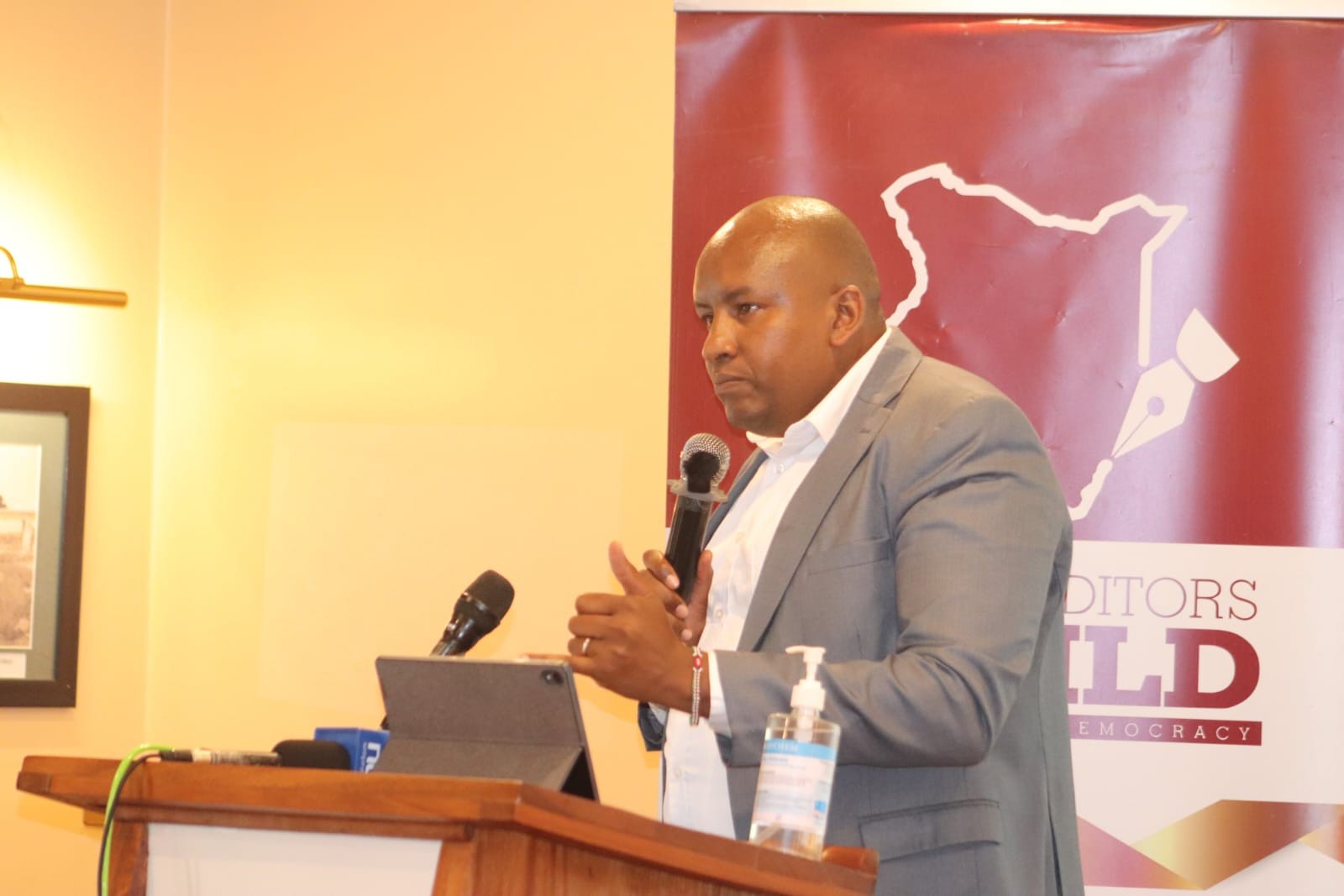
Kenya Editors Guild Vice President Francis Openda challenged journalists to take a more deliberate approach to reporting public expenditure, warning against a media culture that gives prominence to government announcements without sufficiently investigating what happens after projects are launched.
He argued that reporting on public investments must extend beyond groundbreaking ceremonies, official statements and project commissioning events to establish whether taxpayers are receiving value for their money.
"The success of these engagements will be measured by the quality and impact of our journalism," Openda said, urging editors and reporters to ask difficult questions about government borrowing and follow public money beyond signing ceremonies and official announcements.
He further challenged journalists to interrogate audit reports, investigate stalled or overpriced projects and hold public institutions accountable for the use of public resources.
His concerns reflect a critical weakness in development reporting, where major infrastructure and public investment projects often receive extensive coverage at the announcement stage, while subsequent reporting on implementation, expenditure and delivery receives considerably less attention.
Openda maintained that the responsibility of the media does not end when a government announces a project or when construction begins. Journalists must establish whether the project was completed, whether it achieved its intended purpose, how efficiently public funds were utilised and who ultimately benefited.
"When public money is borrowed, lost through corruption, or invested in projects that fail to deliver value, it is ordinary Kenyans who ultimately pay the price," he said.
The discussions reinforce the concerns raised during the earlier public finance dialogue, where Busia Senator Okiya Omtatah questioned the constitutional safeguards governing the National Treasury and raised concerns about domestic borrowing and parliamentary oversight. Read more here
Together, the engagements point to a wider accountability challenge: Kenya's public finance debate must move beyond the amount of money borrowed to examine the legal authority behind borrowing, the institutions responsible for managing it and the actual outcomes of public expenditure.
The challenge for the media is therefore to connect government borrowing with the everyday experiences of citizens, including the quality of public services, the delivery of infrastructure and the country's growing debt obligations.
Ultimately, the effectiveness of public finance oversight cannot be measured by the number of audit reports produced, parliamentary discussions held or government projects launched. It must be demonstrated through corrective action, responsible use of public resources and measurable results for the people whose taxes finance government operations.

