
Kenya’s Ebola Response Hinges on Transparency, Timely Information and Public Cooperation
Posted by EDITORIAL
Kenya and global health leaders call for trust, transparency and community engagement to strengthen Ebola preparedness and public health security.
In Summary:
Health leaders at the Trust Summit in Nairobi have called for transparent communication, stronger regional cooperation and meaningful community engagement to strengthen Kenya’s preparedness for Ebola and other public health emergencies, warning that weak public trust can undermine even well-funded response systems.
Health leaders have called for greater transparency, stronger international cooperation and meaningful community engagement in disease preparedness, warning that public trust remains a critical factor in Kenya’s ability to respond effectively to Ebola and other emerging health threats.
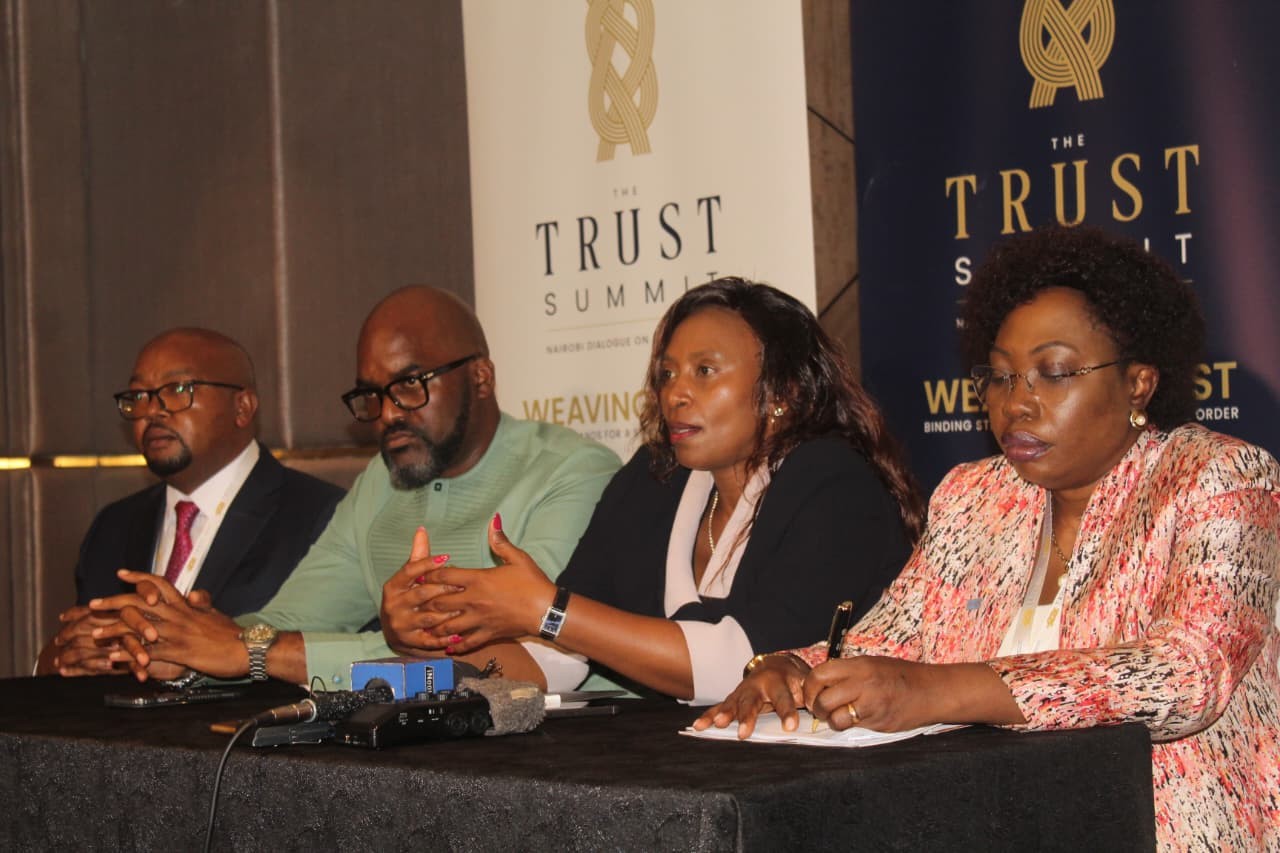
Speaking Yesterday during the second day of the Trust Summit in Nairobi, government officials and international health experts said investments in laboratories, healthcare workers and emergency response infrastructure would have limited impact without public confidence in the institutions responsible for protecting communities.
The leaders emphasised that trust must be built before a public health emergency occurs, rather than sought after an outbreak has already triggered fear, uncertainty and misinformation.
Mary Muthoni Muriuki, Principal Secretary in the State Department for Public Health and Professional Standards, said timely access to accurate information was essential to helping the public understand health risks and respond appropriately to official guidance.
She stressed the importance of explaining the distinction between an imported Ebola case and a confirmed outbreak, alongside clarifying public health measures such as quarantine and isolation.
“People can handle difficult news, but they cannot accept being kept in the dark,” Muriuki said, underscoring the need for authorities to communicate openly during public health emergencies.
The Principal Secretary said Kenya had trained more than 5,000 healthcare workers, strengthened laboratory capacity and improved disease surveillance and emergency response coordination as part of its preparedness efforts.
However, she cautioned that public communication must respect patient confidentiality and privacy, warning that stigma could discourage individuals from seeking medical attention or cooperating with health authorities.
“The virus spreads fastest where trust is weakest, and our task is to earn that trust every day through honesty, competence and care,” she said.
Muriuki said the Ministry of Health was committed to providing regular, verified public updates and sharing findings from its after-action review to strengthen preparedness and accountability.
She also urged international partners to support countries that promptly report public health threats, arguing that punitive responses could discourage governments from sharing information early enough to prevent wider transmission.
“Countries that report quickly and honestly should be met with support, not sanctions,” she said.
Africa CDC Calls for Community-Led Emergency Response
Prof Yap Boum II, Head of the Emergency Preparedness and Response Division at the Africa Centres for Disease Control and Prevention (Africa CDC), warned that fragmented responses and inadequate information-sharing could weaken efforts to contain outbreaks that cross national borders.
He said no country could independently access all the information, expertise and resources required to manage a regional health emergency, making coordinated action essential to protecting public health across Africa.
Boum argued that effective health security depended on governments and institutions sharing information transparently, coordinating resources and deploying expertise where it was most urgently needed.
He further emphasised that communities must be involved in designing and implementing emergency interventions instead of being treated merely as recipients of instructions from authorities.
Drawing lessons from eastern Democratic Republic of Congo, he said resistance to public health measures could reflect longstanding grievances, insecurity, displacement and previous experiences of institutions failing to address community concerns.
“What we sometimes describe as community resistance may actually reflect our failure to meet community expectations,” Boum said.
He called for village chiefs, women, young people and other local leaders to participate actively in disease surveillance, contact tracing and emergency response planning.
According to Boum, the objective should extend beyond containing an immediate outbreak to building lasting relationships between communities, governments and health institutions.
Such relationships, he said, would help strengthen public confidence and improve cooperation when emergencies arise.
WHO Warns Misinformation Threatens Global Health Cooperation
Dr Neema Rusibamayila Kimambo, Acting World Health Organization representative to Kenya, said trust directly influenced whether people sought medical care, accepted vaccines and followed public health guidance.
She warned that misinformation, geopolitical tensions and economic uncertainty were putting pressure on international cooperation at a time when emerging health threats increasingly required coordinated responses.
Kimambo said the credibility of international health institutions could not depend solely on their mandates but had to be demonstrated through scientific integrity, transparent decision-making, accountability and tangible results for communities.
She called on institutions to communicate clearly about scientific evidence, including what was known, what remained uncertain and why public health recommendations might change as new evidence emerged.
Kimambo added that countries could not effectively address disease outbreaks, climate-related emergencies and other emerging health threats by acting independently.
“The future of global health will not be determined by science, technology or financing alone. It will depend on the trust that enables communities, governments and international institutions to act together,” she said.
Her remarks highlighted the importance of combining scientific expertise with public accountability and accessible communication to ensure that health interventions receive the cooperation they require.
The summit also highlighted the role of trust in international health financing, with Susan M. Burns, Chargé d’Affaires at the United States Embassy in Kenya, outlining a shift towards greater national ownership of health programmes.
Burns said confidence developed through decades of bilateral cooperation had helped underpin the Kenya-US health partnership.
She noted that the two countries were moving towards a framework that places greater responsibility on national governments for the ownership, leadership and long-term financing of health programmes.
According to Burns, Kenya was the first country to sign a bilateral health agreement under the new approach, which seeks to strengthen the sustainability of national health systems while maintaining international cooperation.
Under the five-year framework she outlined, the United States will provide USD 1.6 billion in resources, alongside USD 850 million in Kenyan investment.
The arrangement incorporates shared benchmarks, co-investment, predictable financing and joint monitoring, with both governments expected to account for their commitments and evaluate progress against agreed results.
“Our shared ambition is a future where Kenya leads, Kenya funds and Kenya sustains the health of its people, with the United States remaining a trusted partner,” Burns said.
She emphasised that the transition must protect continuity of essential healthcare services, warning that patients should not bear the burden of changes in funding arrangements or programme delivery.
Her remarks underscored the importance of predictable financing, institutional capacity and sustained partnerships in maintaining essential health services, particularly during emergencies.
Public Trust Emerges as a Foundation for Health Security
The discussions at the Trust Summit highlighted a common challenge facing governments and health institutions: the need to combine scientific preparedness and adequate financing with public confidence, institutional accountability and community participation.
While Kenya continues to strengthen its capacity to detect and respond to emerging health threats, the leaders stressed that preparedness must also include clear communication, respect for patient privacy and mechanisms that allow communities to participate in decisions affecting their health.
The discussions further highlighted the importance of regional information-sharing, reliable international partnerships and sustainable domestic financing in building resilient health systems.
As countries confront evolving disease threats, the speakers said, public trust must be treated as a central component of health security rather than an afterthought in emergency planning.
Their message was clear: effective outbreak response requires not only the capacity to detect and contain disease, but also the credibility to ensure that communities, governments and international partners act together.